


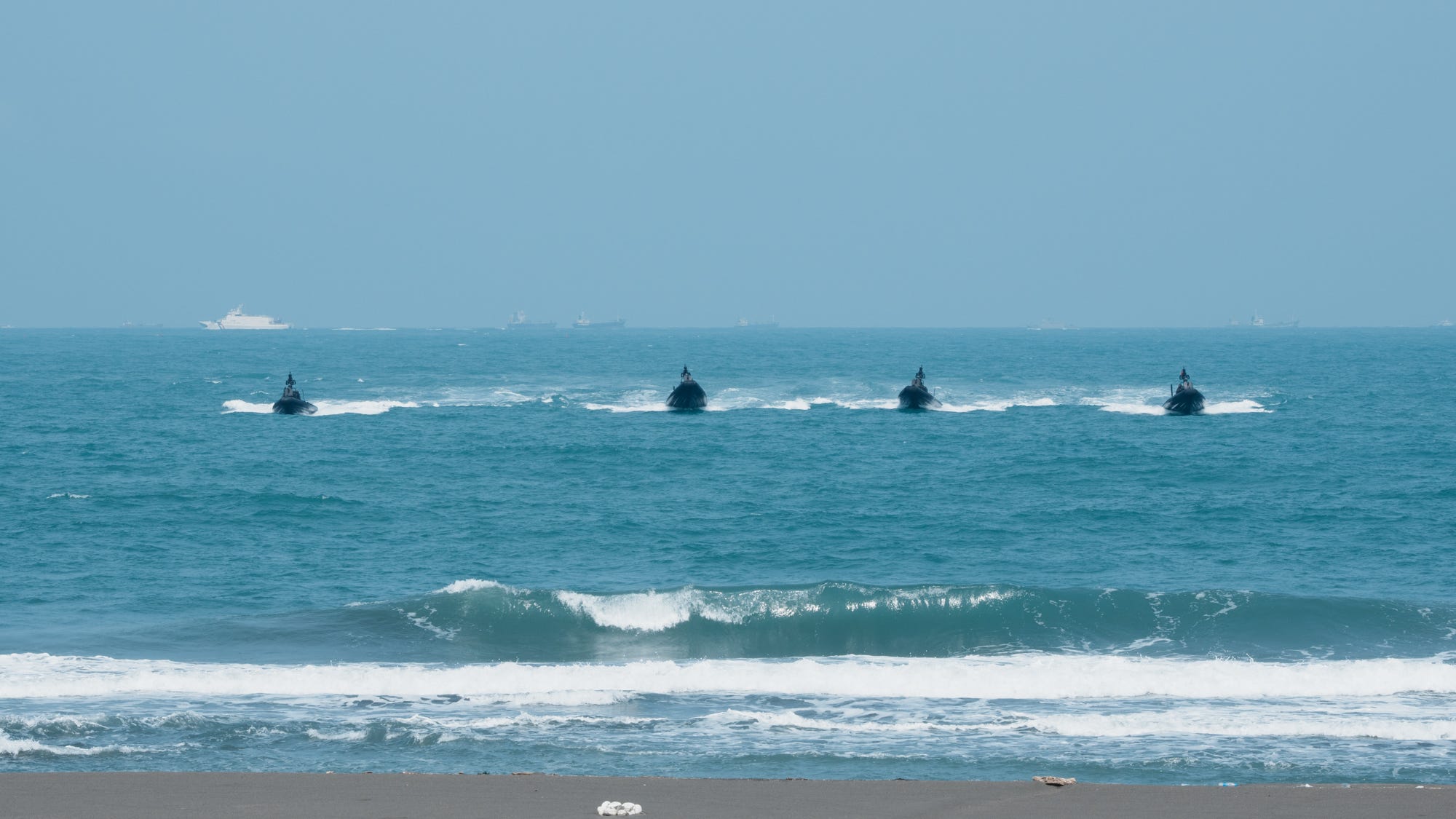
This is Part IV of Strait Outta Taiwan’s ongoing series analyzing the Han Kuang 42 Exercise (漢光42號演習, HK42). HK42 started just over a week ago and rapidly progressed through its first two phases, “Preparedness Deployment (備戰部署)” and “Force Protection and Preservation (戰力防護及保存).” By August 8, the focus of this installment, the “Joint Counter-Landing (聯合反登陸)” phase, had begun. Part III of this series examined Preparedness Deployment, but the exercise’s unscripted nature and rapid progression blurred the lines between all four phases.
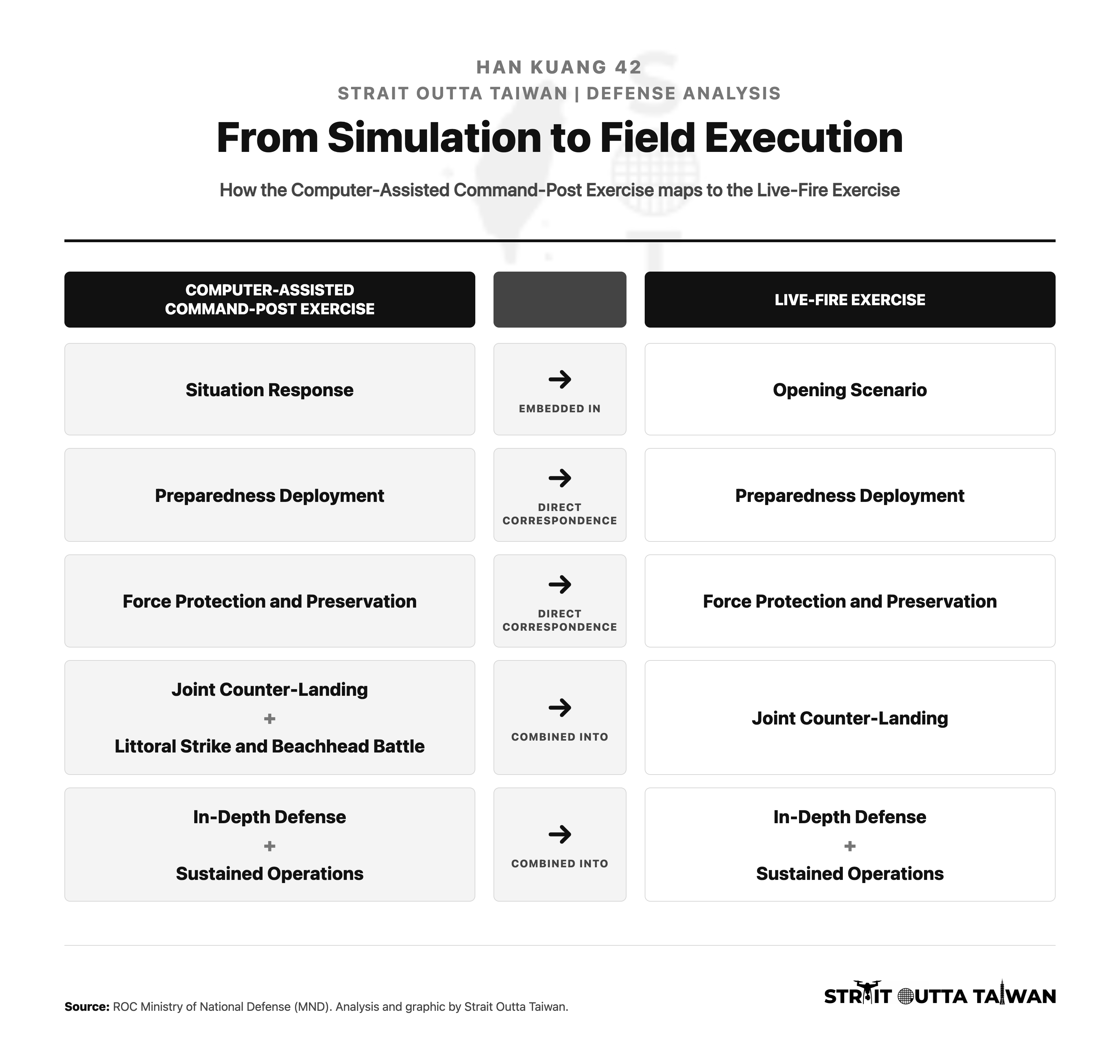
The Ministry of National Defense (國防部, MND) defines HK42’s Joint Counter-Landing phase as:
Simulating a scenario in which the People’s Liberation Army [人民解放軍, PLA] conducts joint fire strikes and its amphibious landing force conducts a maritime transit, followed by multidomain, multi-point amphibious landing operations. The Republic of China [中華民國, ROC] Armed Forces conduct key operations including securing localized air superiority, air defense of key areas, air-sea coordination, littoral strikes, nearshore defense, and the destruction of enemy forces by fire in key areas, in order to assess joint operational command and control and cross-domain fires coordination capabilities.
Read Strait Outta Taiwan’s HK42 analysis here:
Two parts of the Joint Counter-Landing phase have stood out. First, expanding the engagement zone against approaching PLA landing forces before they get close to Taiwan’s shoreline. Second, testing how Taiwan’s forces can respond to PLA units that penetrate Taiwan’s initial defensive layers.
I. Expanding the Counter-Landing Engagement Zone
Littoral Strike and Nearshore Defense drill livestream.
On the morning of August 8, President Lai Ching-te (賴清德總統) observed a “Littoral Strike and Nearshore Defense (濱海打擊及近岸防禦)” drill in Kaohsiung. The exercise, livestreamed by the ROC Navy (海軍), demonstrated operations extending from emergency sortie and littoral strike to nearshore defense. Taken together, the drill showed Taiwan trying to extend its counter-landing engagement zone outward while linking drones, maritime forces, and nearshore defenders into a broader defensive sequence.
I discussed this in comments to Business Insider, flagging that Taiwan needs to create more engagement opportunities before the PLA gets close to the shore:
A range of 40 kilometers to 60 kilometers would be very useful for a whole host of different platforms, anything to make it more difficult for the PLA to start getting into Taiwan’s territorial waters.
That range also broadly aligns with the outer operational layer identified in CNAS’s “Hellscape for Taiwan” report, which places some coastal engagement zones roughly 40–80 kilometers from shore.
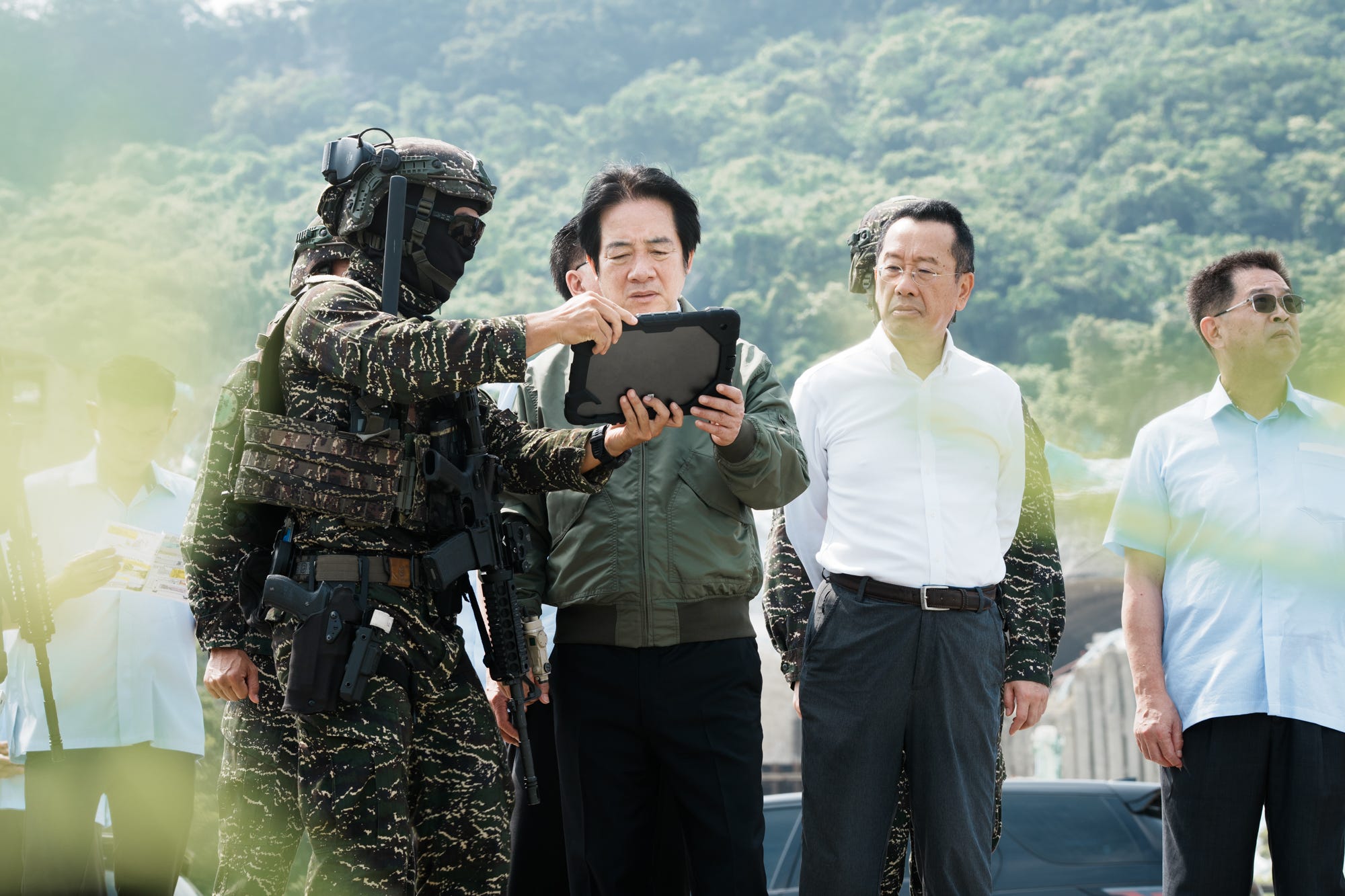
Throughout the drill, reflecting what was envisioned for Littoral Combat Command (海濱作戰指揮部), unmanned systems and other emerging technologies were fully integrated. As noted in Part I of this HK42 series, Legislator Chen Kuan-Ting (陳冠廷立委) described the Command’s use of unmanned systems as providing “eyes, brains, and fists (眼睛、大腦與拳頭).” This drill put the legislator’s description of the Command’s kill chain on full display and into action. Furthermore, the drill highlighted another HK42 theme — deepening integration between the ROC Navy and Coast Guard (海巡).
II. Containing Enemy Breakthroughs
Live-fire Joint Counter-Landing drill on Penghu Island.
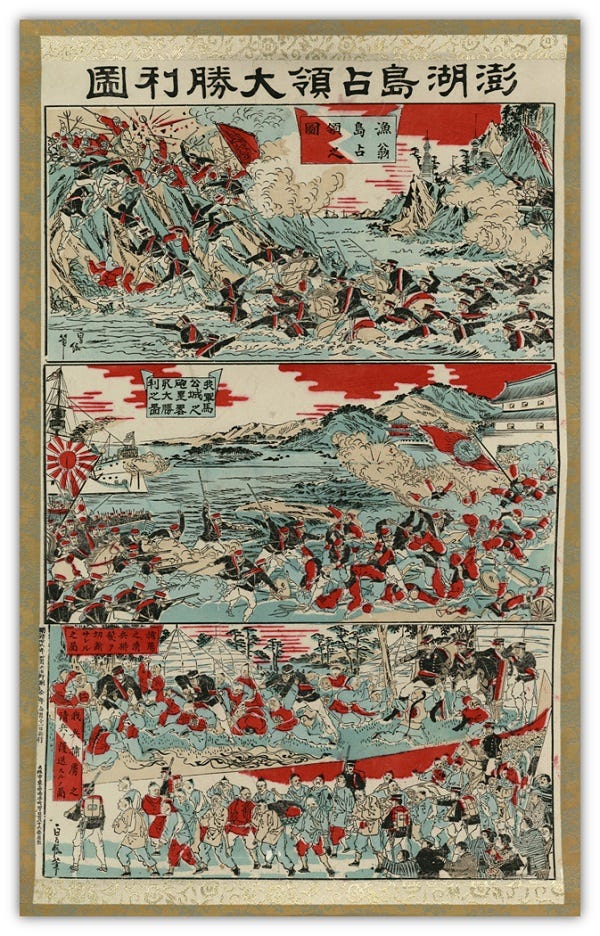
In the Joint Counter-Landing phase of HK42 and beyond, ways to plug PLA breakthroughs in littoral environments have been a consistent theme. Penghu County, a Taiwan-controlled archipelago in the middle of the Strait, has little geographic or strategic depth but is vital to defending Taiwan’s main island. Penghu has been integral to Taiwan’s security. It was used by Koxinga in the 17th century as a staging ground to invade Taiwan and was seized by the Imperial Japanese Forces as part of their campaign to take Taiwan in the late 19th century.
I spoke with Domino Theory about the importance of Penghu, where I highlighted:
The Penghu drill matched the expected mission of dispersed, survivable, road-mobile anti-ship fires that can defend threatened littoral sectors.
To prepare Penghu, MND’s First Operational Zone Command rehearsed counter-landing drills, coastal strikes, anti-airborne/air assault drills, and protected critical infrastructure by placing barriers and other engineering structures along the coastline. These drills seek to prevent PLA forces from establishing or consolidating a foothold. Similar drills have occurred across Taiwan, particularly in Yilan County in the northeast and New Taipei City, which encircles Taipei City.
Establishing a defensive line on the Tamsui River.
Within New Taipei City, especially along the Tamsui River, a breach could provide PLA forces with an avenue to rapidly reach Taiwan’s political center, Taipei’s Zhongzheng District. As a result, defending the mouth of the Tamsui River and areas along its banks has been a priority for HK42.
HK42’s Joint Counter-Landing phase shows that Taiwan seeks to engage PLA forces before they reach the shoreline. Simultaneously, Taiwan is preparing to contain forces that penetrate its initial defenses and prevent them from consolidating a foothold. The exercise’s final phase, “In-Depth Defense and Sustained Operations (縱深防禦及持久作戰),” presents the challenge of fighting PLA forces that have made it through these initial defensive layers.
If you found this installment useful, consider subscribing to Strait Outta Taiwan to receive future installments directly in your inbox.