


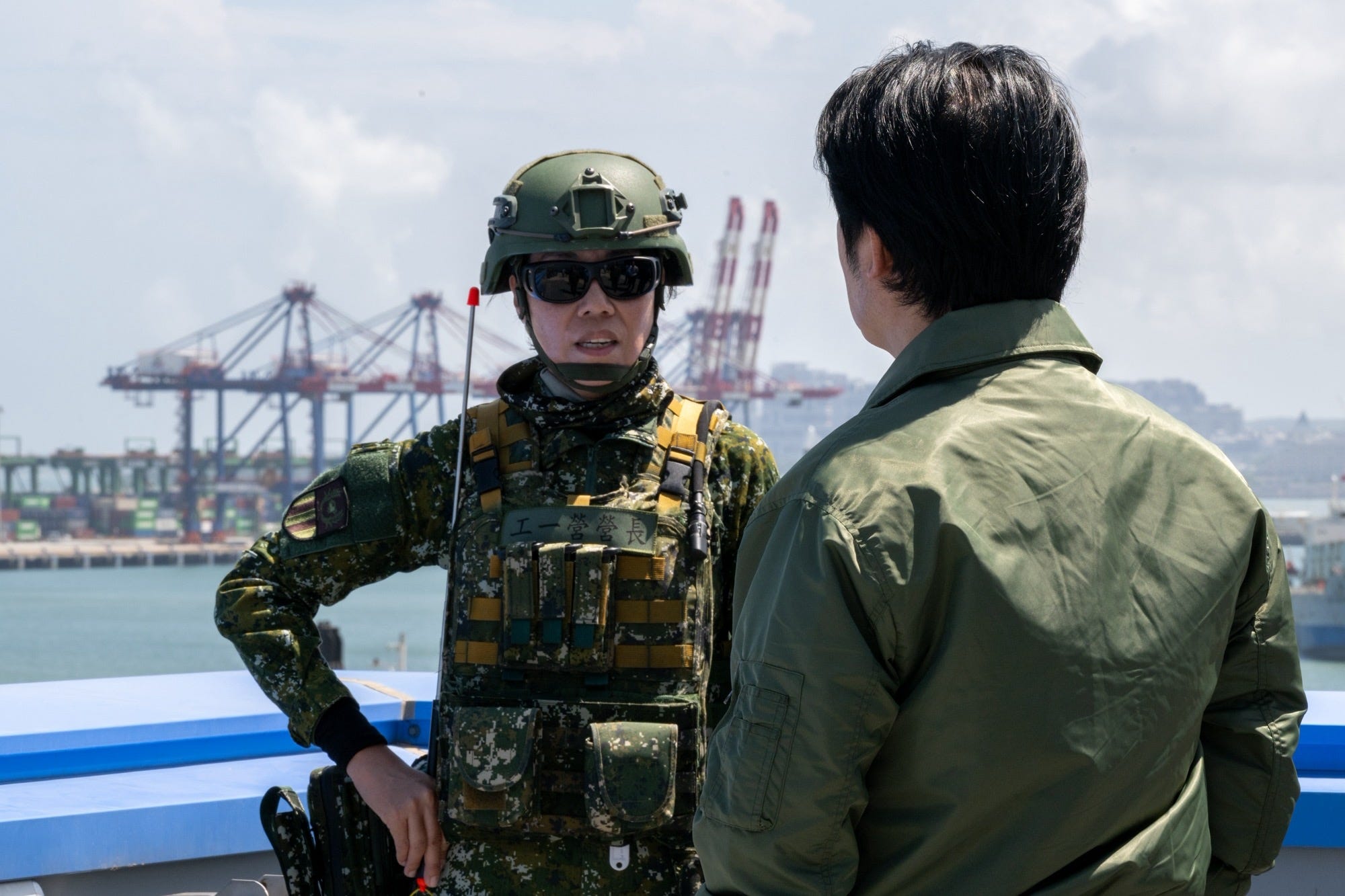
This is Part III of Strait Outta Taiwan’s ongoing series analyzing the Han Kuang 42 Exercise (漢光42號演習, HK42). The exercise started on Wednesday, August 5, 2026, and will conclude on Friday, August 14. This installment highlights efforts to execute the first phase of HK42, “Preparedness Deployment (備戰部署),” from August 5–7 through dispersal and decentralization, as well as the obstruction and securing of key locations.
According to the Ministry of National Defense (國防部, MND), HK42’s Preparedness Deployment phase focuses on:
Under the guise of its annual joint military exercises, the People’s Liberation Army [人民解放軍, PLA] conducts large-scale amphibious assault training to conceal its intent to attack Taiwan while completing final preparations for an invasion. The three services immediately raise their combat-readiness posture and, in conjunction with Immediate Readiness Exercises [立即戰備操演], carry out peacetime-to-wartime transition measures including mobilization preparations, pre-positioning of obstacles, dispersed stockpiling of materiel, cross-regional maneuver, and preparations for defensive mine-laying.
Read Strait Outta Taiwan’s HK42 analysis here:
The ability to prevent decapitation — of national leadership and across Taiwan’s command-and-control (C2) structure — could, as Ukraine has demonstrated, sow the seeds of a rally-around-the-flag effect in the days, weeks, and potentially months after Zero Day.
I. Dispersal & Decentralization
Wednesday morning, August 5, air and naval assets were dispersed in an emergency fashion to test how quickly these platforms could be protected in the event of an invasion or contingency. Mirage 2000s, F-16Vs, C-130s, E-2Ks, and P-3Cs were flown from bases on Taiwan’s west coast in Hsinchu, Chiayi, and Pingtung to Chihhang and Chiashan air bases in Taitung and Hualien. Similarly, Coast Guard and Navy vessels departed the Port of Keelung near Taipei.
Replenishment operation with civilian vehicles.
The next day, logistics were similarly distributed across military bases and civilian points of interest using military and civilian assets. For example, in Hualien, civilian trucks were requisitioned by the military for a replenishment operation to transport ammunition and rations under the guise that they would be less likely to be attacked by PLA forces. In keeping with the theme of greater civil-military cooperation, civilian tractor-trailers supplied frontline M109 howitzers with concealed 155 mm ammunition.
To ensure that Taiwan’s national leadership could withstand attempts against it through decapitation attacks, President Lai participated in the Wanjun Plan (萬鈞計劃), where the 202nd Military Police transported him at night from the Presidential Office (總統府) to the Heng Shan Military Command Center (衡山指揮所) in the north of Taipei. The exercise also demonstrated decentralization beyond C2, particularly through the integration of civilian assets into military logistics. For example, civilian fuel trucks replenished military fuel trucks to sustain troops in northern Taipei that were defending the red beaches.
II. Obstructing & Securing Key Locations
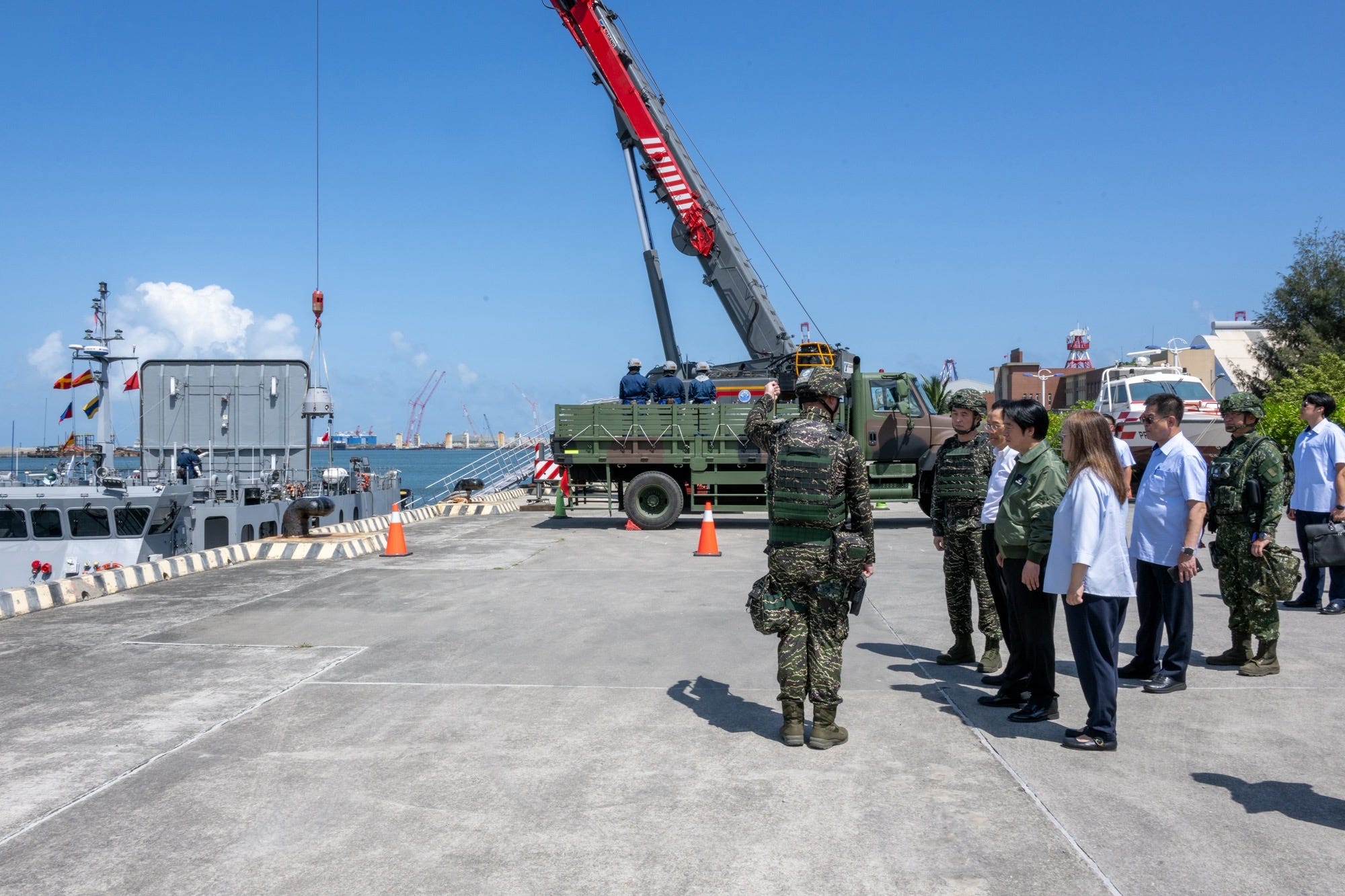
Next, the Preparedness Deployment phase focused on obstructing and securing key locations of strategic importance around Taiwan’s main island and outer islands. For example, the Port of Taipei (台北港) was obstructed by mobilizing civilian cargo and fishing vessels to block its entrance as well as loading mines aboard Navy and Coast Guard vessels the following day. Together, these measures created a layered harbor-denial defense at the Port of Taipei.
Livestream of the obstruction operation on Taipei’s Danjiang Bridge (淡江大橋).
Civilian volunteers from MND’s All-Out Defense Mobilization Agency (全民動員署, ADMA) and military personnel worked together to place obstacles on red beach access roads in Yilan County. Similarly, ADMA volunteers and military personnel also placed barriers and obstacles on the Danjiang Bridge, at the mouth of the Tamsui River north of Taipei — a highlight of HK42 prominently promoted by MND.
Key locations were secured around Taiwan. For example, military and civilian authorities worked together to place reversible and irreversible obstacles around Taoyuan International Airport to defend it against potential PLA airborne incursions.
Troops were deployed to Green and Orchid Islands.
Likewise, outer islands, specifically Taitung County’s Green and Orchid Islands, as well as Xiaoliuqiu in Pingtung County, were secured. Their proximity to Chihhang and Chiashan air bases and Kaohsiung City, respectively, means that securing them early helps ensure the PLA cannot use them as forward bases for helicopters, drones, or missiles. If seized, they would threaten those air bases and Kaohsiung City. Military personnel were deployed to the islands using civilian ferries, and a similar operation was carried out on Green and Orchid Islands in last month’s Joint Defense Exercise (聯合防禦操演).
The first phase of HK42’s live-fire exercise, the Preparedness Deployment, is about rapidly complicating the PLA’s ability to paralyze Taiwan in the opening of any contingency. To respond, MND has focused on several areas, but dispersal and decentralization, as well as obstructing and securing key locations, highlight efforts to stymie PLA operations. As HK42 progresses, the Preparedness Deployment phase has laid the foundation for assessing how effectively Taiwan can execute the phases that follow.
If you found this installment useful, consider subscribing to Strait Outta Taiwan to receive future installments directly in your inbox.