


For many observers, the Han Kuang exercise begins when armored vehicles and troops roll into the streets of Taipei. In reality, the exercise, specifically this year’s iteration, Han Kuang 42 Exercise (漢光42號演習, HK42), is the culmination of a broader cycle of command-post planning, immediate readiness and mobilization exercises, and joint training that has unfolded over months.
To understand Han Kuang, it’s necessary to grasp how Taiwan’s military exercise system has evolved. Its annual combat patch, the capabilities highlighted, and the exercise itself reveal an armed force that is iterating, evaluating, and adapting its doctrine, training, and capabilities for an asymmetric defense strategy — and civilian leadership seeking deeper integration to strengthen Taiwan’s whole-of-society response.
I. Understanding the Han Kuang Exercise
Military News Agency’s HK42 Trailer.
On Tuesday, July 28, 2026, within the Republic of China (ROC) Ministry of National Defense (MND) Taipei Headquarters, a press conference previewed the live-fire portion of the HK42. Scheduled for August 5—14, 2026, HK42 is Taiwan’s largest annual military exercise, and this year’s live-fire portion is expected to be the most expansive yet. The MND framed the exercise as a keystone within its “year-round, interconnected exercise-and-training cycle (全年度連貫演訓方式).”
Han Kuang is no longer a single ten-day military exercise, but the culminating live-fire event in a series of year-round trainings and exercises beginning with computer-assisted planning and slowly building towards civil preparedness activities and a large live-fire exercise. HK42 will offer a window into how Taiwan is developing its own “Hellscape Strategy” and preparing for asymmetric defense, while prominently centering civil-military resilience.
Archival footage from the 1958 Combined U.S.-ROC Military Exercise (中美軍事大演習), depicting the first combined amphibious landing by U.S. and ROC Marines at Fangliao, southern Taiwan. The exercise foreshadowed concepts that underpin the Han Kuang exercises. Video by the National Film and Audiovisual Center.
Han Kuang’s origins can be found in the Sino-American Mutual Defense Treaty between the U.S. and the ROC before the termination of diplomatic relations in 1979. The Combined U.S.-Chinese Military Exercises (中美聯合軍事演習), which included personnel from the then-U.S. Taiwan Defense Command and ROC MND units, were Taiwan’s first major annual military exercises. Following the diplomatic rupture, the exercises were eventually named Han Kuang, a reference to the ROC slogans, “China, Liberate the Mainland (大漢、光復大陸)” and “Liberate China (大漢光復).” HK1 took place in 1984, and subsequent successor exercises have a number as well.
II. How Han Kuang 42 Works
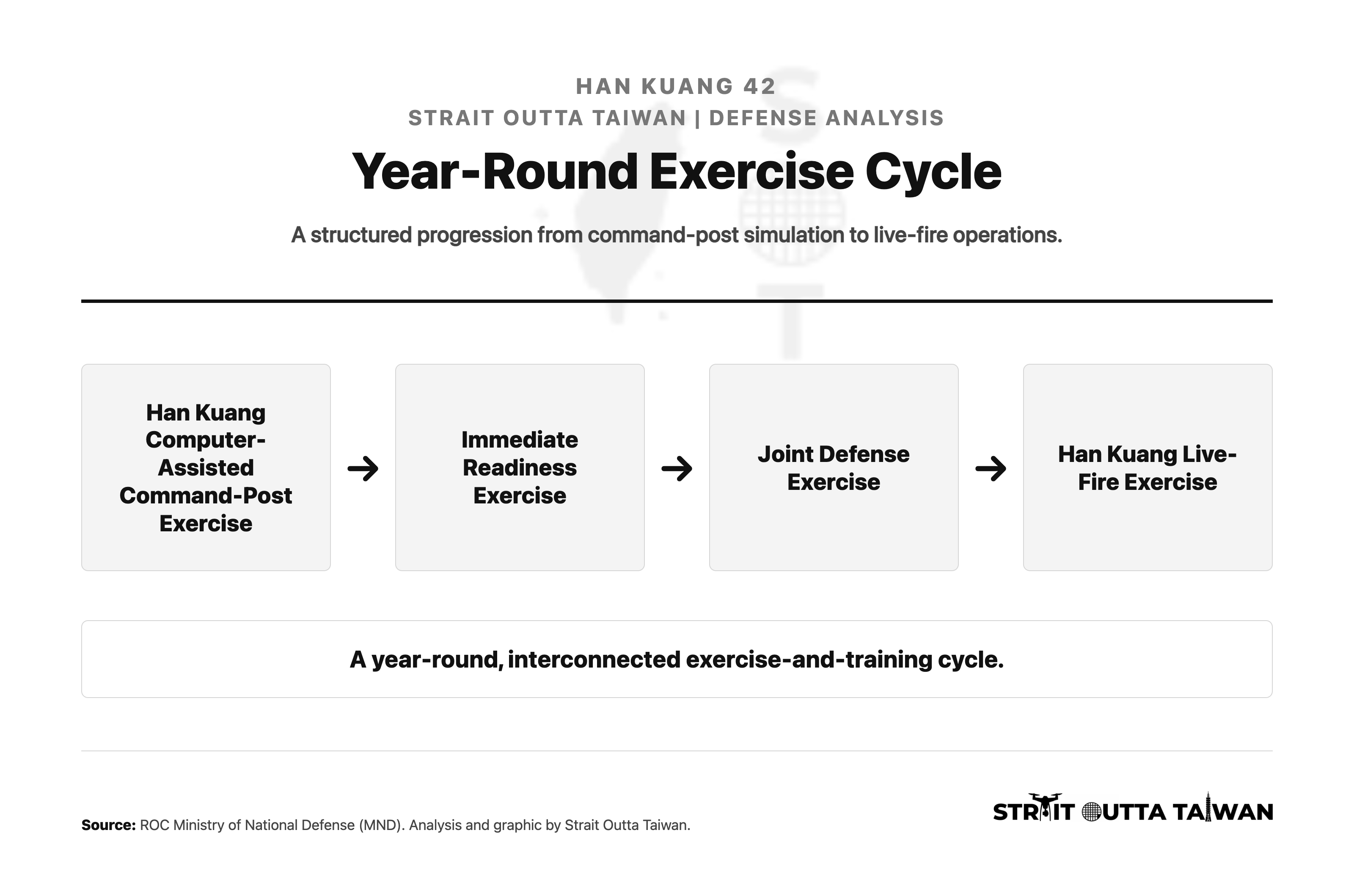
Starting this year, Han Kuang’s live-fire exercise functions as the culmination of a four-part training and exercise cycle. According to the MND, this four-part continuous training and exercise cycle is intended to incorporate “revisions of the Joint Operations Plan, force structure adjustments, and subsequent military buildup and readiness planning” while strengthening Taiwan’s “multi-domain denial and resilient defense” capabilities.
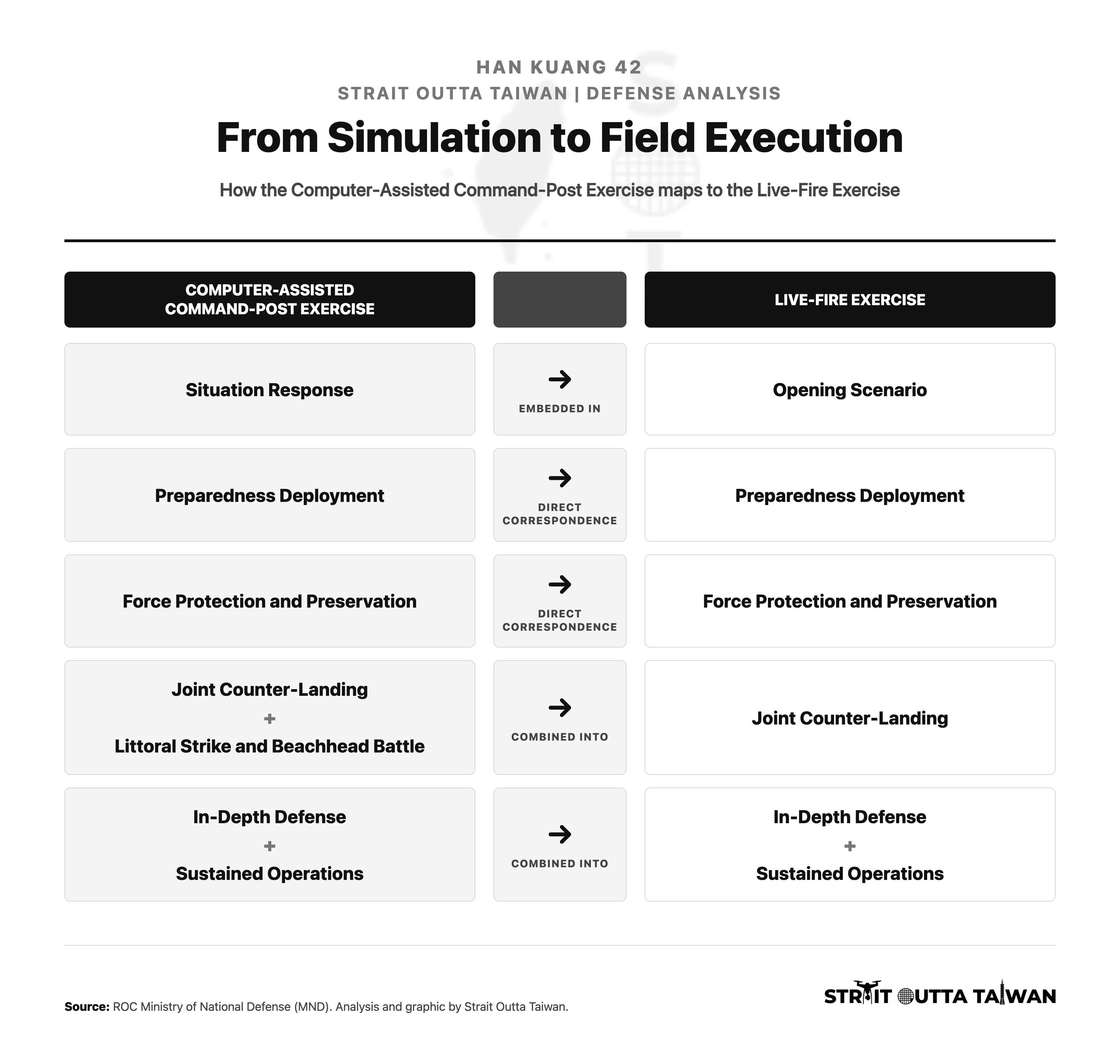
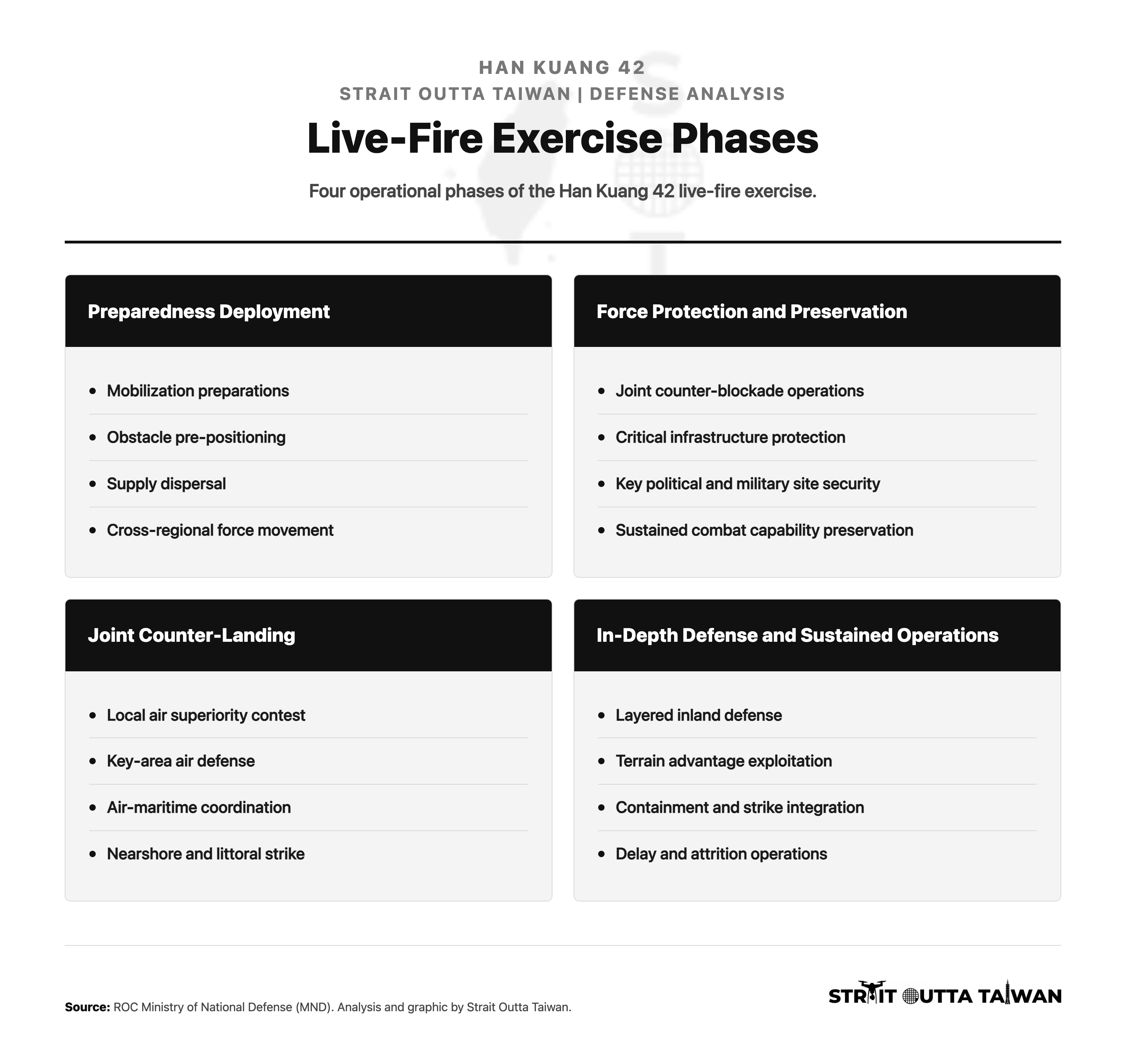
These four phases structure HK42’s live-fire exercise. In contrast, HK41 featured five phases and began with the Gray-Zone Response (灰色地帶襲擾應處) phase, and treated Littoral and Beachhead Operations (濱海暨灘岸戰鬥) as distinct from the Joint Counter-Landing phase. The Immediate Readiness Exercise (立即戰備操演), which fell under HK41’s Gray-Zone Response phase, is now a standalone exercise as of HK42. Given the increase by the People’s Liberation Army (PLA) naval and air forces, the Chinese Coast Guard, and Blue Water Militia across the First Island Chain, Taipei appears to be preparing for the possibility that a contingency emerges with little or no warning.
Han Kuang and similar exercises are often affected by typhoons. For example, this year’s Joint Defense Exercise, the MND positioned troops to move directly from the exercise’s training to assisting with cleanup, humanitarian assistance, and disaster-response missions related to Typhoon Bavi. Building upon a broader civil-military integration push, operational commanders were instructed to stay in contact with county and city governments and provide support as needed.
III. Reading the Han Kuang 42 Combat Patch
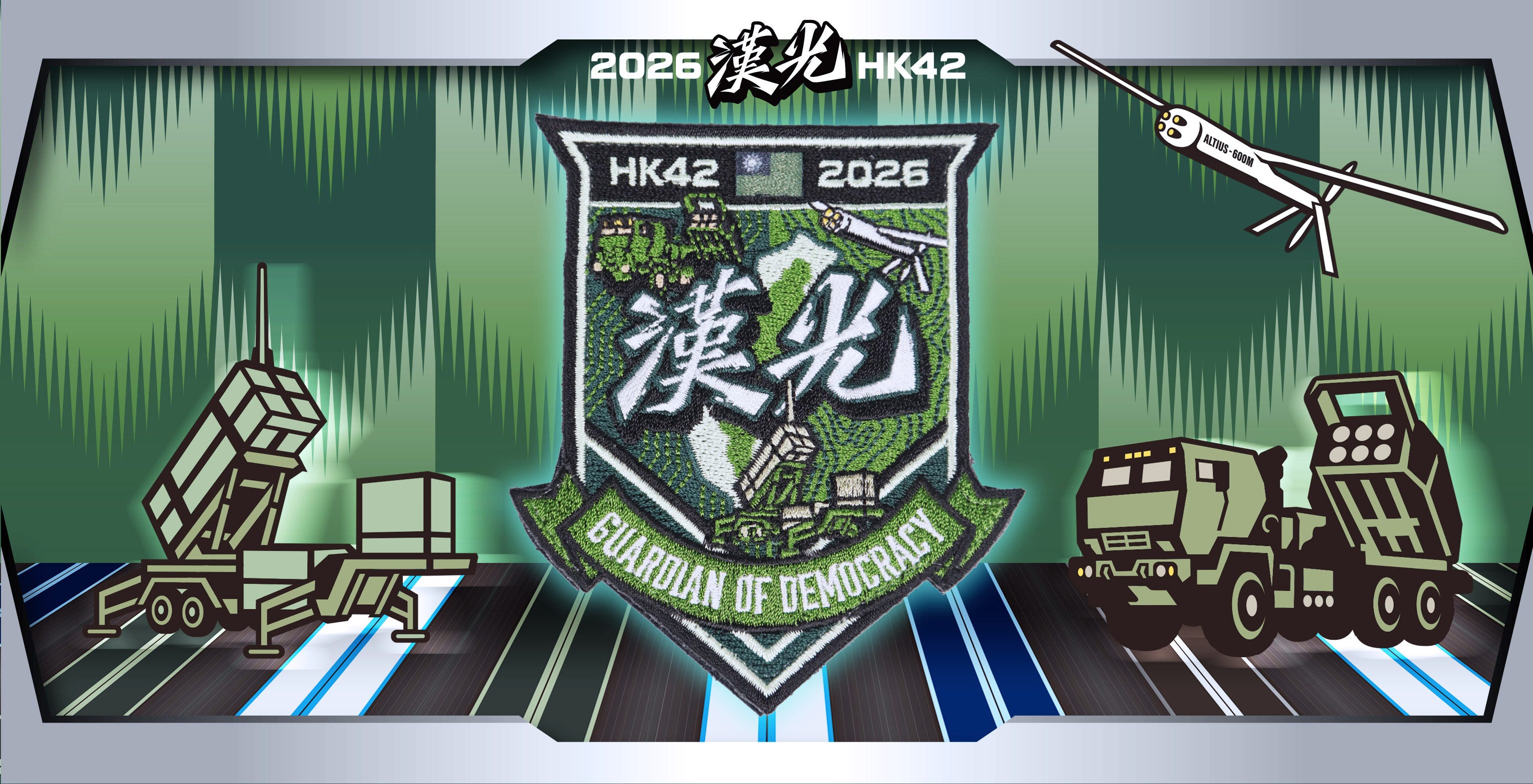
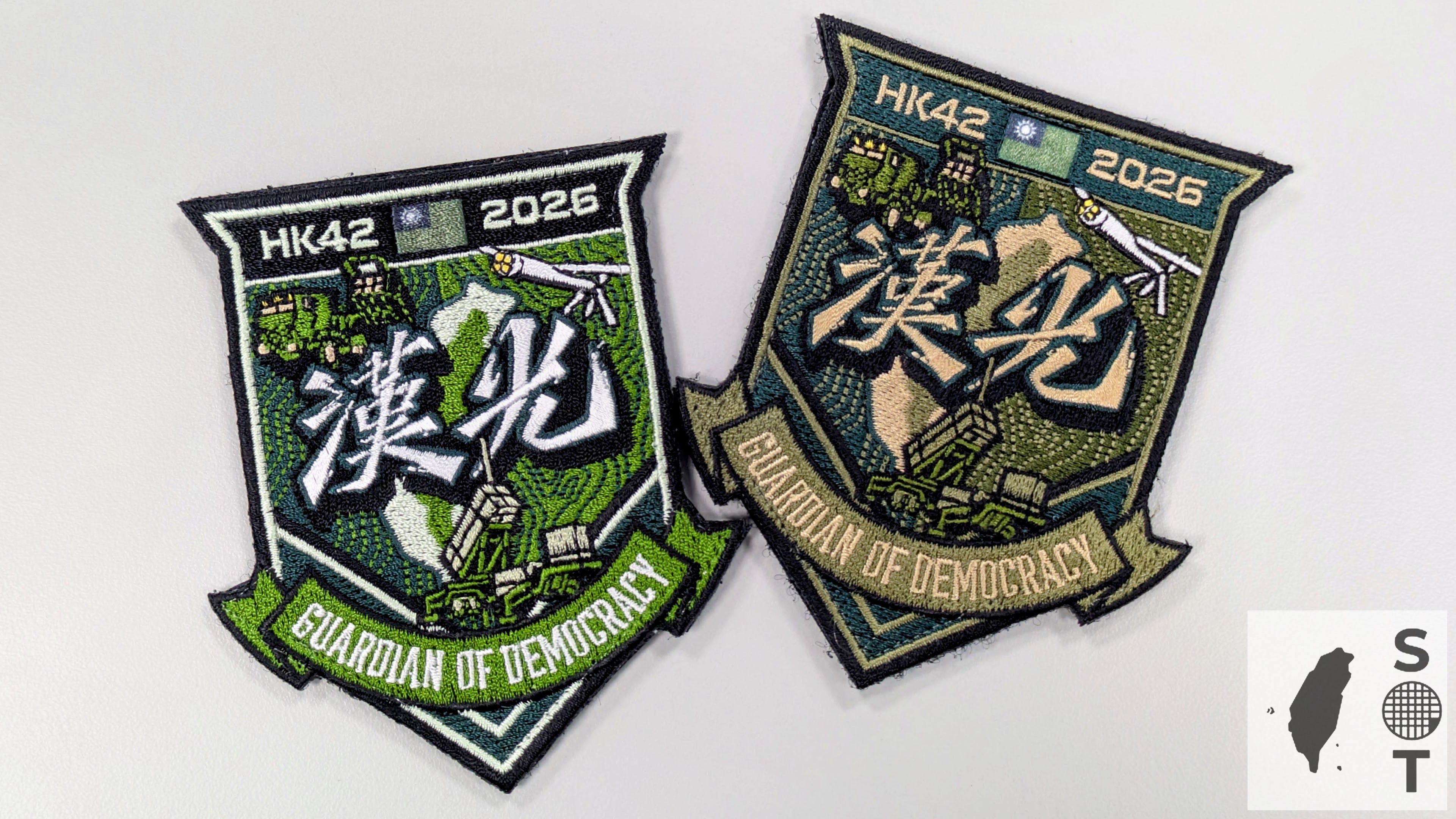
HK42’s combat patch retains the recurring “Guardian of Democracy” framing while highlighting three weapon systems key to the island’s defense — the M142 High Mobility Artillery Rocket System (HIMARS), the ALTIUS-600M Attack UAV, and the Patriot PAC-3 air-defense system — set against a circuit board backdrop. Together, they communicate several messages:
Reliance on U.S. Systems and Interoperability: All three capabilities are U.S.-made or supplied, signaling reliance on U.S. systems and potential interoperability.
Layered Asymmetric Defense: Collectively, they represent complementary aspects of Taiwan’s layered asymmetric defense capabilities, i.e., long-range precision fires (HIMARS), loitering attack drones (ALTIUS-600M), and air and missile defense (Patriot PAC-3).
Integration into the Broader First Island Chain Defense Ecosystem: Points to the broader regional defense ecosystem with the U.S. and allies integrating similar capabilities in exercises, drills, and demonstrations.
Technology, the Force Multiplier: The circuit board background points to the tech-led changing elements of modern warfare and Taiwan’s growing asymmetric capabilities powered by emerging technologies.
M142 HIMARS
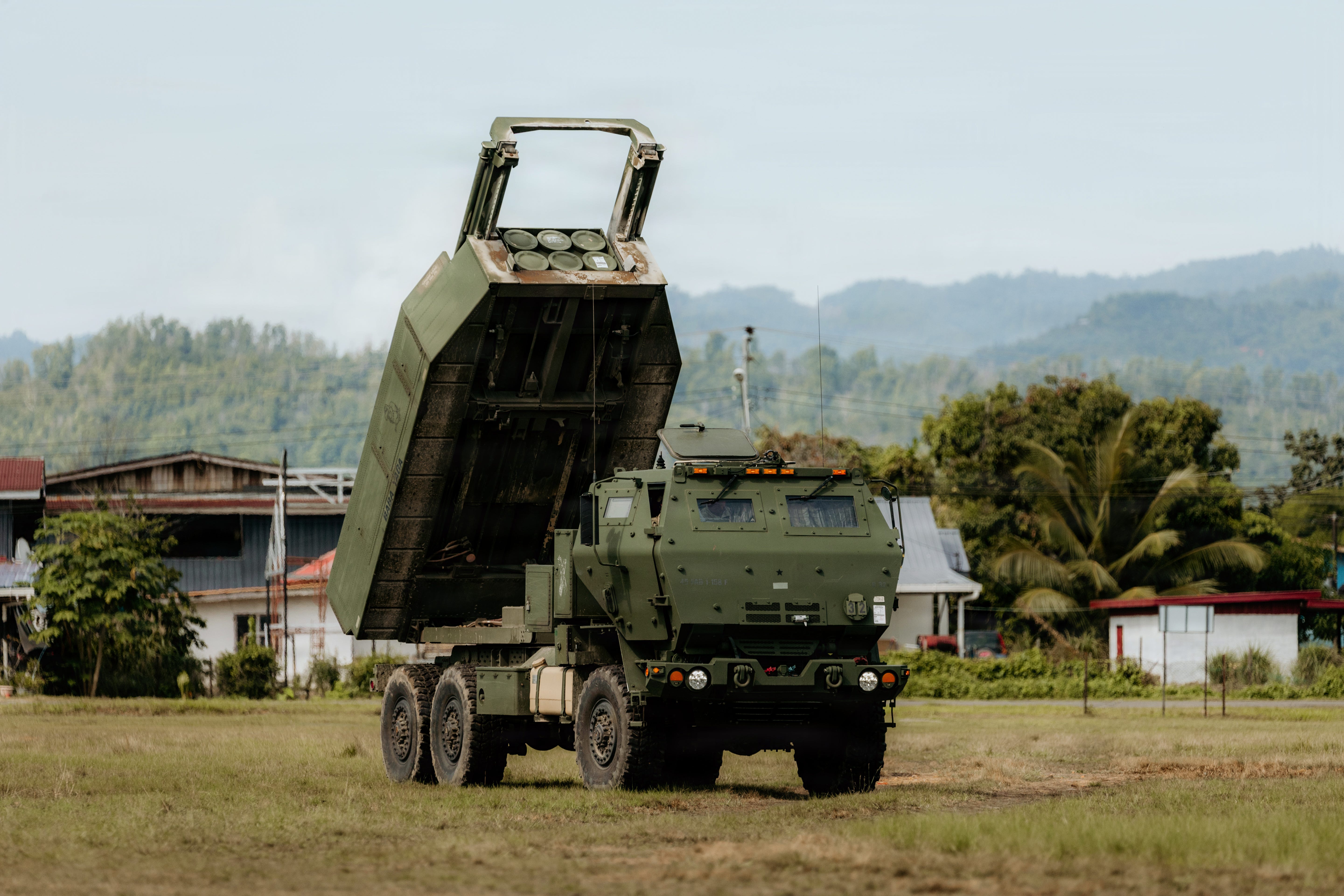
HIMARS’s inclusion on the HK42 combat patch underscores the MND’s emphasis on long-range precision fires. HIMARS helped enable the Ukrainian Armed Forces to engage in precision strikes deeper into Russian rear territory by targeting logistic nodes, supply networks, rear troops, and other enablers of Russian troops. Taiwan has also begun integrating HIMARS into its own defensive posture with maneuver drills and live-fire demonstrations focused on the Taiwan Strait. HIMARS was deployed prominently in both the Immediate Readiness Exercise for force preservation and engagement drills and the Joint Defense Exercise, with rapid cross-operational-area fire support.
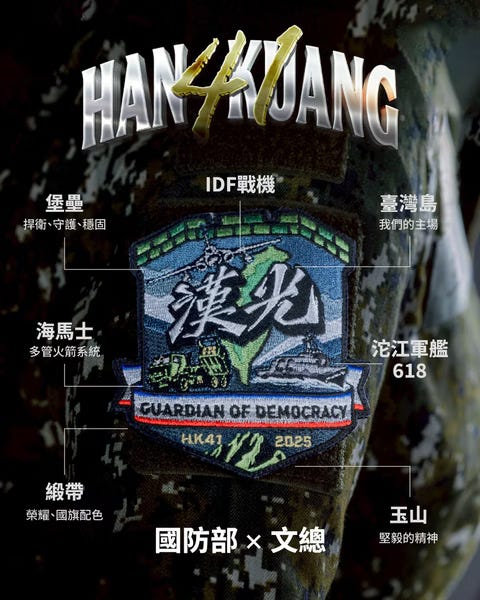
Of the three platforms depicted on HK42’s combat patch, HIMARS is the only one that has appeared before, with HK41’s patch also prominently featuring the HIMARS. The platform also appeared in PLA messaging surrounding the December 2025 Justice Mission Exercise. A propaganda poster released by the PLA Eastern Command showed the HIMARS being carried by container ships turning back, a point the Global Times stressed in its commentary. Taken together, these references suggest HIMARS is essential to Taiwan’s defense and a major irritant to the PLA.
Patriot PAC-3
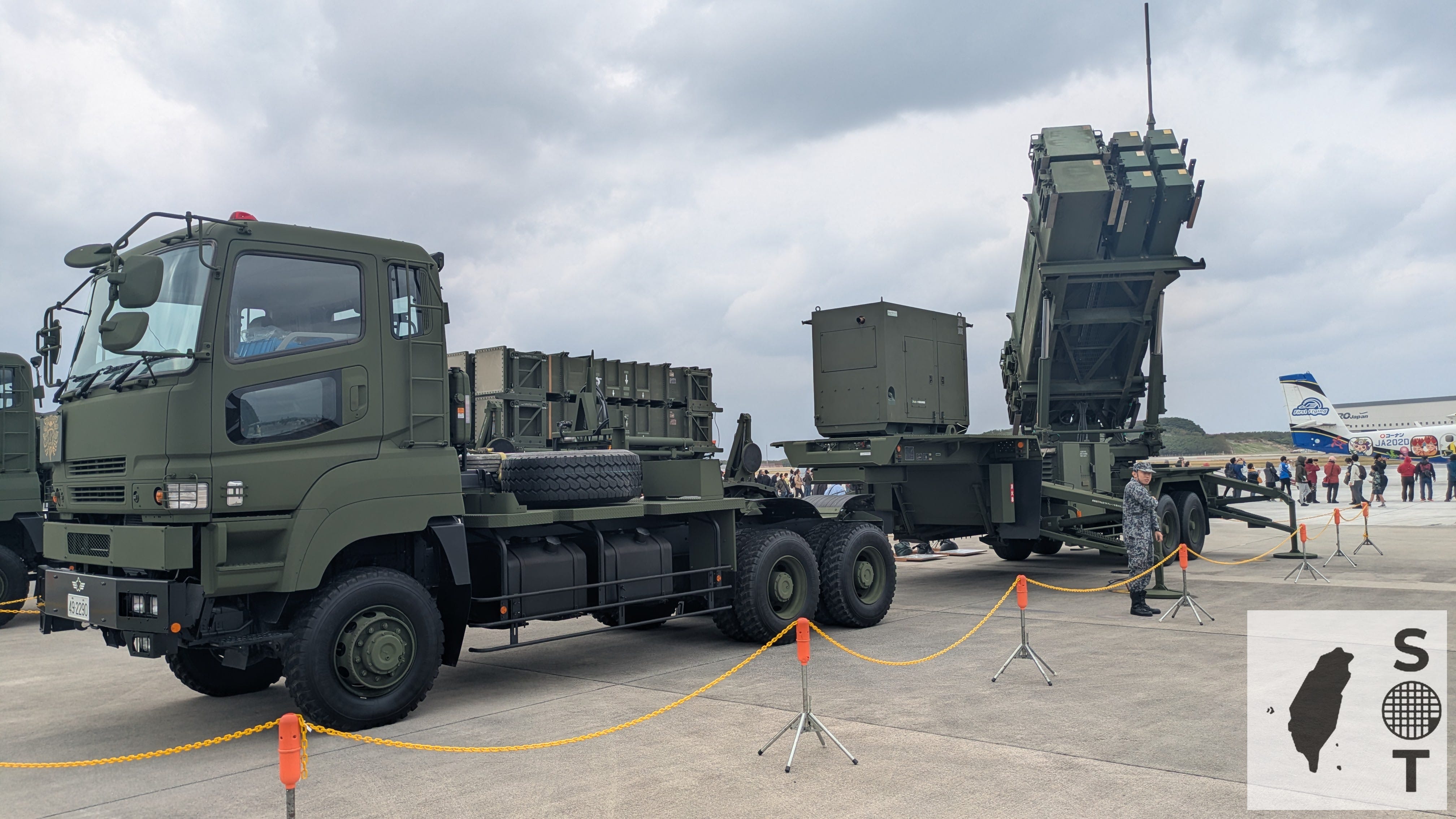
The Patriot PAC-3 remains Taiwan’s principal strategic air and missile defense capability, forming the upper tier of its layered network alongside indigenous systems. The MND has repeatedly showcased Patriot batteries over the past year — during HK41, PAC-2 and PAC-3 units were deployed across Taipei for air-defense drills. Similarly, for Justice Mission 2025, PAC-3 batteries operated around Taiwan to monitor PLA live-fire activity and rehearse combat-readiness procedures. Its inclusion on the HK42 patch underscores the centrality of air and missile defense to Taiwan’s deterrence posture, especially as the MND continues developing its T-Dome integrated air-defense concept.
ALTIUS-600M
ROC MND ALTIUS-600M Attack UAVs conducting their first sea target shooting. Video by Military News Agency.
Lastly, the ALTIUS-600M Attack UAV was included on the HK42 patch because it illustrates how Taiwan is integrating unmanned platforms into kill chains to defend its littoral. The ALTIUS-600M not only serves as a strike asset but also sits at the intersection of distributed sensing, target identification, and lower-cost precision attack. That role is especially relevant after Taiwan’s recent establishment of the Littoral Combat Command (濱海作戰指揮部), with the ALTIUS-600M providing a key standoff capability.
IV. What I Will Be Watching
The most revealing aspects of HK42 will not necessarily be the newest platforms on display, but how Taiwan employs them. The exercise offers an opportunity to assess whether recent time and money investments in the ROC forces are learning to disperse, survive, communicate, and generate combat power under sustained attack. With that in mind, these are capabilities and concepts I will watch closely.
HIMARS Deployments
U.S. Air Force, Balikatan 2026: 317th AW, 25th ID perform HIRAIN in Itbayat, Philippines. Video by Senior Airman Jade M. Caldwell, April 23, 2026. DVIDS. Video ID: 1004203.
In exercises throughout the Indo-Pacific, HIMARS Rapid Infiltration (HIRAIN), a concept that uses C-130 aircraft to rapidly deploy a HIMARS launcher, conduct a firing mission, and quickly redeploy before the platform can be targeted, has played a central role. The video above shows a HIRAIN mission close to Taiwan on the northern Philippine island of Itbayat, illustrating HIMARS’ importance to the defense of the First Island Chain, including the approaches to Taiwan.
Though Taiwan lacks strategic depth, making a HIRAIN mission impractical, for HK42, HIMARS will likely be dispersed during the Force Protection and Preservation phase and participate in live-fire missions in the Joint Counter-Landing phase to maximize survivability, mobility, and lethality.
The Role of Littoral Combat Command
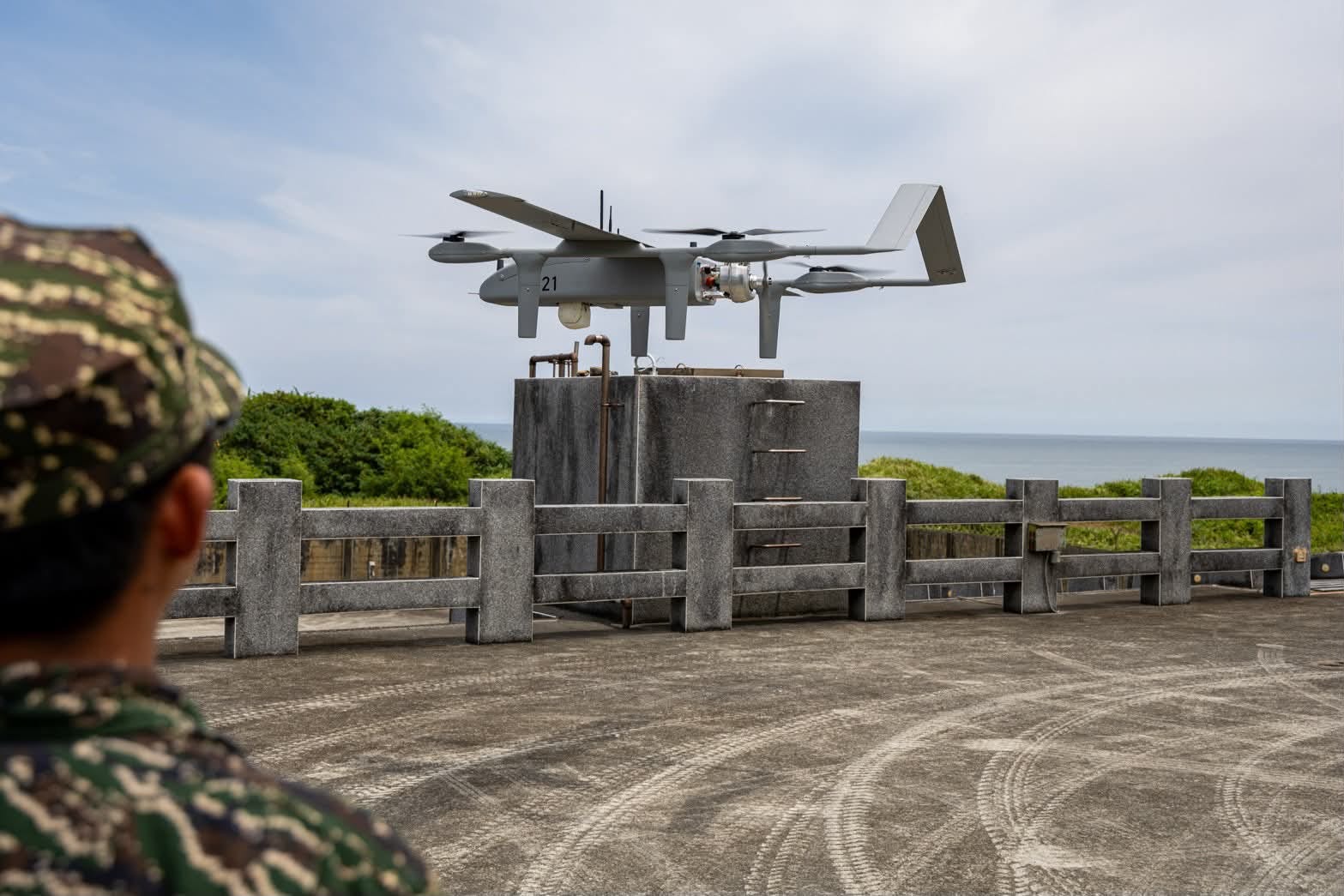
The Littoral Combat Command seems to be operationalizing the concepts highlighted in the Center for a New American Security report, “Hellscape for Taiwan.” As HK42 unfolds, the ALTIUS-600M could become one of this Command’s principal platforms as its counter-landing and standoff doctrines are refined.
After a visit to the Command’s First Group, Legislator Chen Kuan-Ting (陳冠廷立委) described its use of unmanned systems as providing “eyes, brains, and fists (眼睛、大腦與拳頭).” Throughout HK42, ALTIUS-600M and other unmanned systems will likely be deployed during the Joint Counter-Landing phase, fulfilling the role Legislator Chen laid out. I will be watching to see how those systems, in coordination with missile platforms, are utilized in the Command’s kill chain.
Counter-UAS Integration
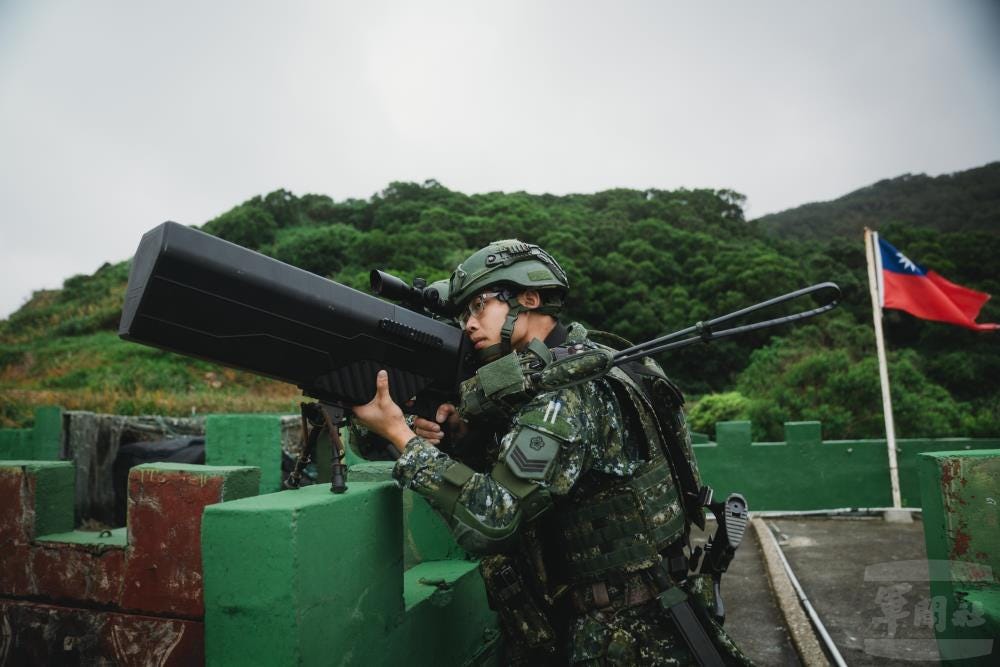
Over the last several years, conflicts from the Middle East to Ukraine have shown how vulnerable bases, critical infrastructure, large platforms, and personnel are to unmanned attacks. Taiwan has taken steps to implement counter-UAS measures, ranging from testing “soft kill (軟殺)” and “hard kill (硬殺)” platforms in the Joint Defense Exercise to purchasing netting to protect military bases.
However, in recent exercises, armored vehicles and field positions are often shown without cages or netting. Furthermore, the recent tragic deaths of U.S. Air Defense Artillery personnel, as well as Ukrainian targeting of Russian S-400 air-defense systems, show that even high-end defensive platforms and personnel are vulnerable to unmanned systems. I will be observing how Taiwan can integrate all forms of counter-UAS measures throughout HK42.
V. Looking Ahead
With HK42 starting on August 5, 2026, I will closely follow the exercise as it unfolds. Expect Strait Outta Taiwan to publish a series of short- and long-form analyses examining not only what happens, but what it reveals about Taiwan’s evolving approach to deterrence, defense innovation, and whole-of-society resilience.
If you found this preview useful, consider subscribing to Strait Outta Taiwan to receive future installments directly in your inbox.