


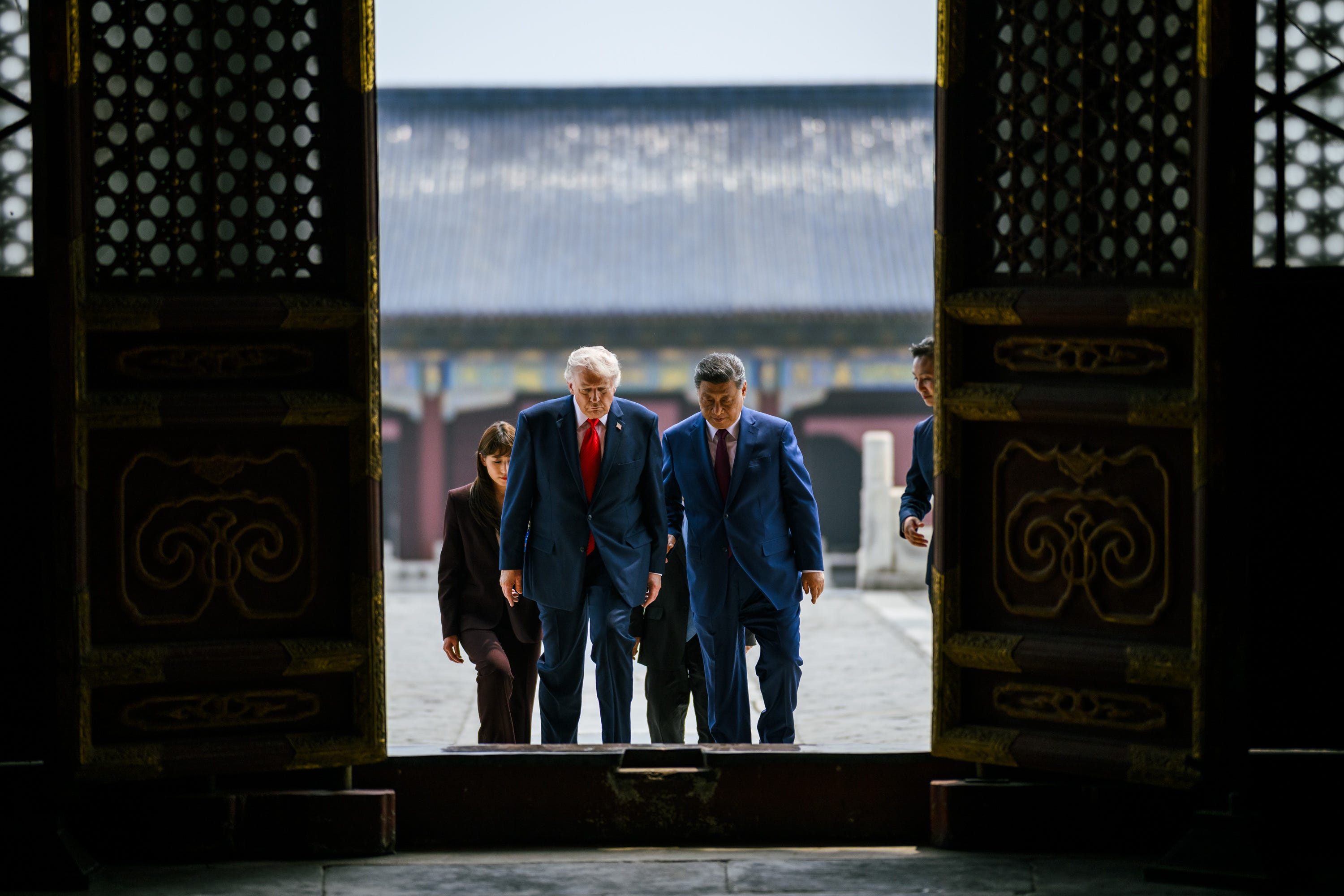
While much of the commentary surrounding the summit between U.S. President Donald J. Trump and his Chinese counterpart, Xi Jinping, has focused on tariffs, Taiwan, and summit optics, one of the most revealing developments occurred last week, before the summit even began.
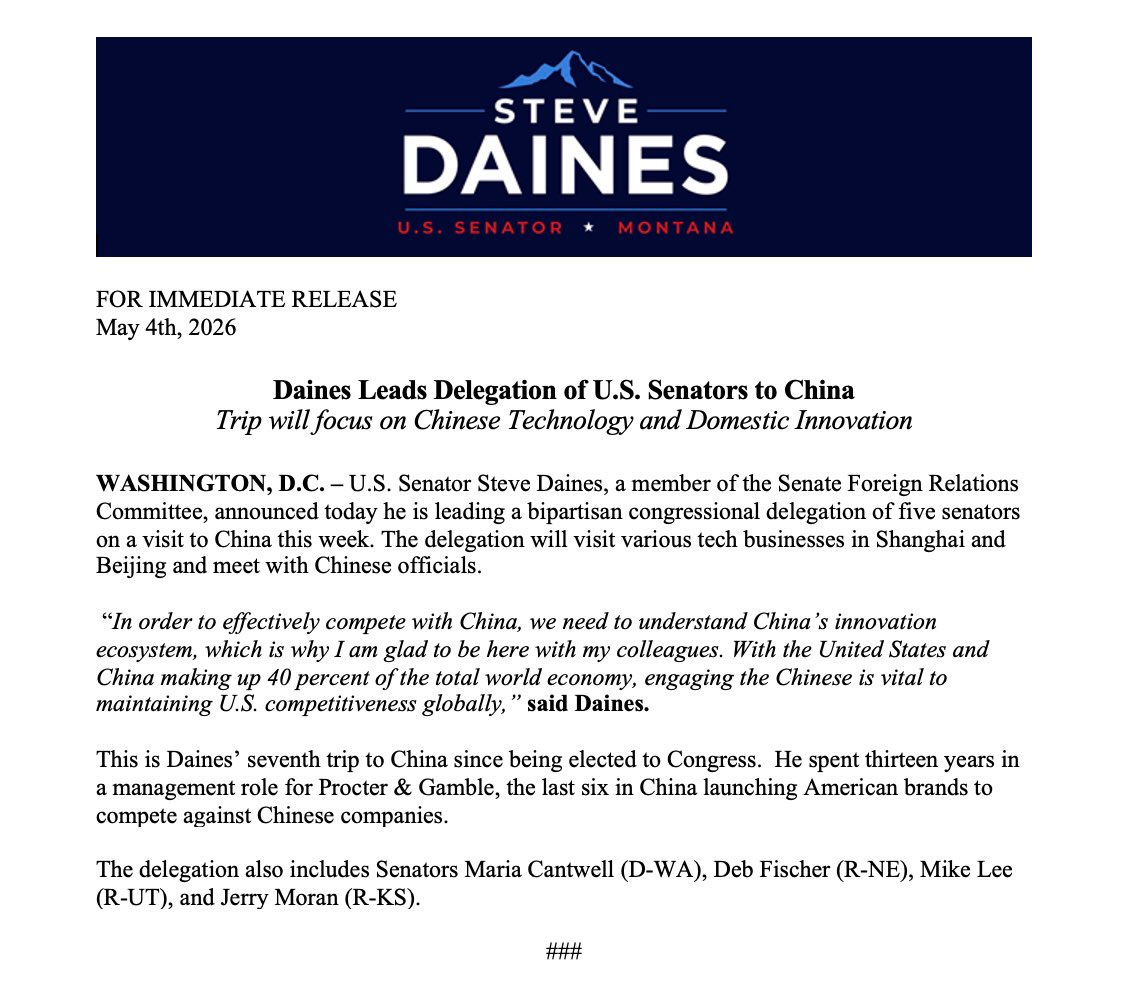
Last week, Senator Steve Daines (R-MO) led a bipartisan Congressional Delegation (CODEL) to China to explicitly focus on “Chinese Technology and Domestic Innovation,” including visits to technology firms in Shanghai and Beijing.
The significance of the Daines CODEL went beyond the visit itself. It reflected that U.S.-China competition is increasingly being shaped by technology ecosystems, industrial capacity, semiconductors, AI, and dual-use innovation rather than trade balances or military signaling alone. Taiwan sits at the center of those ecosystems, particularly in semiconductors and dual-use supply chains, making it increasingly difficult to separate cross-Strait security issues from broader technological and industrial competition.
During the summit, I argued in commentary with Le Point, Newsweek, and Taiwan Talks that Beijing continues to frame the bilateral relationship in a deeply strategic, security-centric manner. At the same time, Washington approaches it through a more transactional, economically oriented lens, focusing on the most sensitive geopolitical flashpoints.
That asymmetry matters because over the three days of the summit, Beijing’s messaging on Taiwan, strategic competition, and broader geopolitical issues remained disciplined, fast, and highly coordinated. Washington’s messaging, by comparison, often appeared slower and more diffuse, reinforcing broader concerns in Taipei and across the Indo-Pacific about how both sides continue to frame long-term competition differently.
Beijing’s confidence was on full display as Chinese state media and the Ministry of Foreign Affairs (MFA) emphasized Xi Jinping’s direct warning to Trump that the “Taiwan question” remains the most important issue in U.S.-China relations and could lead to “clashes and even conflicts” if mishandled. Furthermore, Xi appeared to outline an early vision for managing relations among great powers and for coexistence, even if Trump did not publicly reciprocate or engage with the substance of those remarks.
NVIDIA CEO Jensen Huang’s presence at the summit, future keynote address at COMPUTEX 2026 in Taipei, and ongoing debates surrounding AI chip sales to China all reflect how difficult it has become to compartmentalize Taiwan from broader U.S.-China technological and industrial competition.
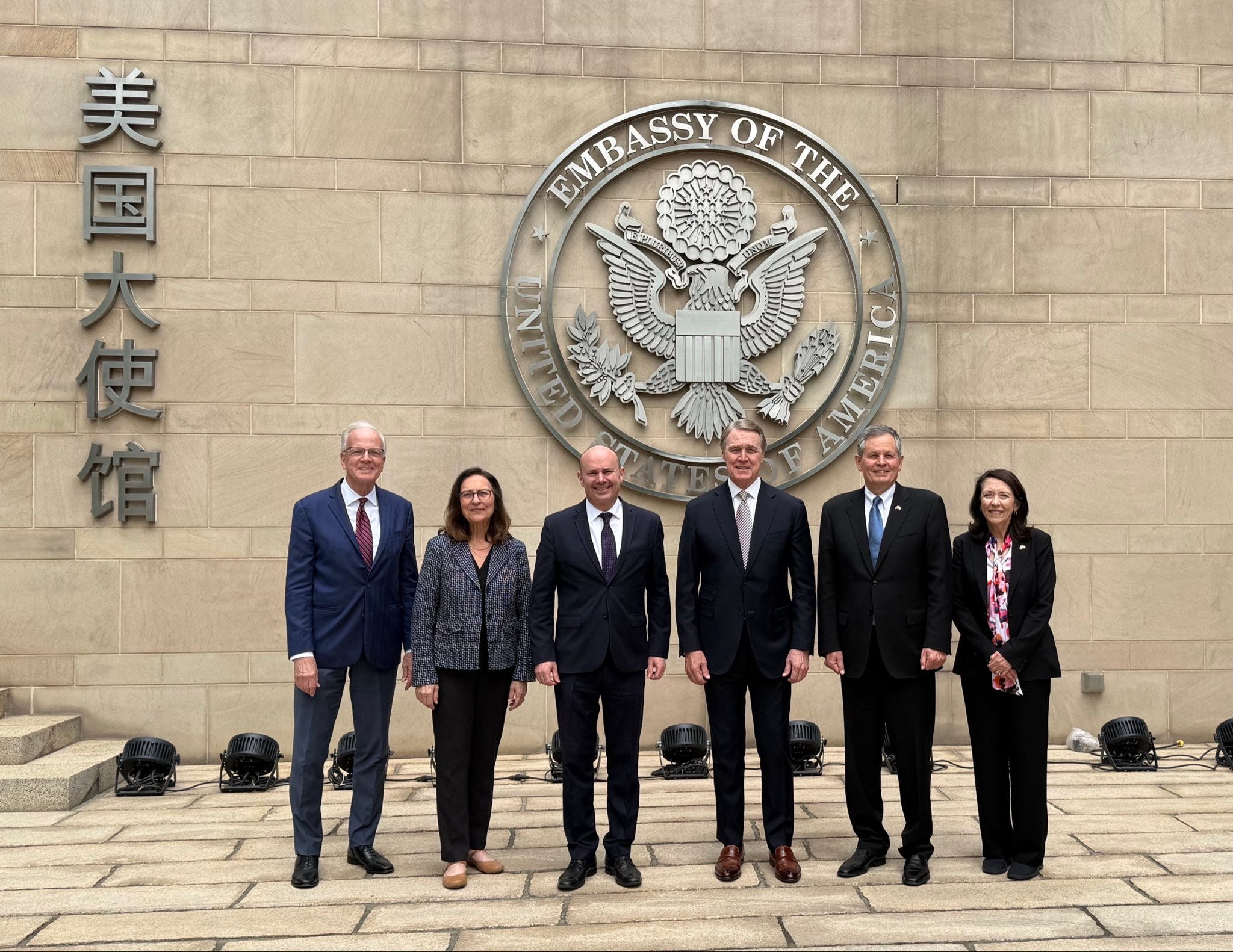
Regardless of whether Washington intended the summit to focus primarily on economics and trade, Beijing repeatedly elevated Taiwan as the focal point of the strategic conversation. At the same time, the Daines CODEL showed that innovation and technology ecosystems are driving long-term U.S.-China competition.
The risk for Taipei is likely not sudden abandonment, but a deeper “linkage” between Taiwan and broader U.S.-China negotiations. Over time, that could manifest through slower arms deliveries, weaker diplomatic signaling, and increasing pressure to fold Taiwan into broader U.S.-China bargaining dynamics.
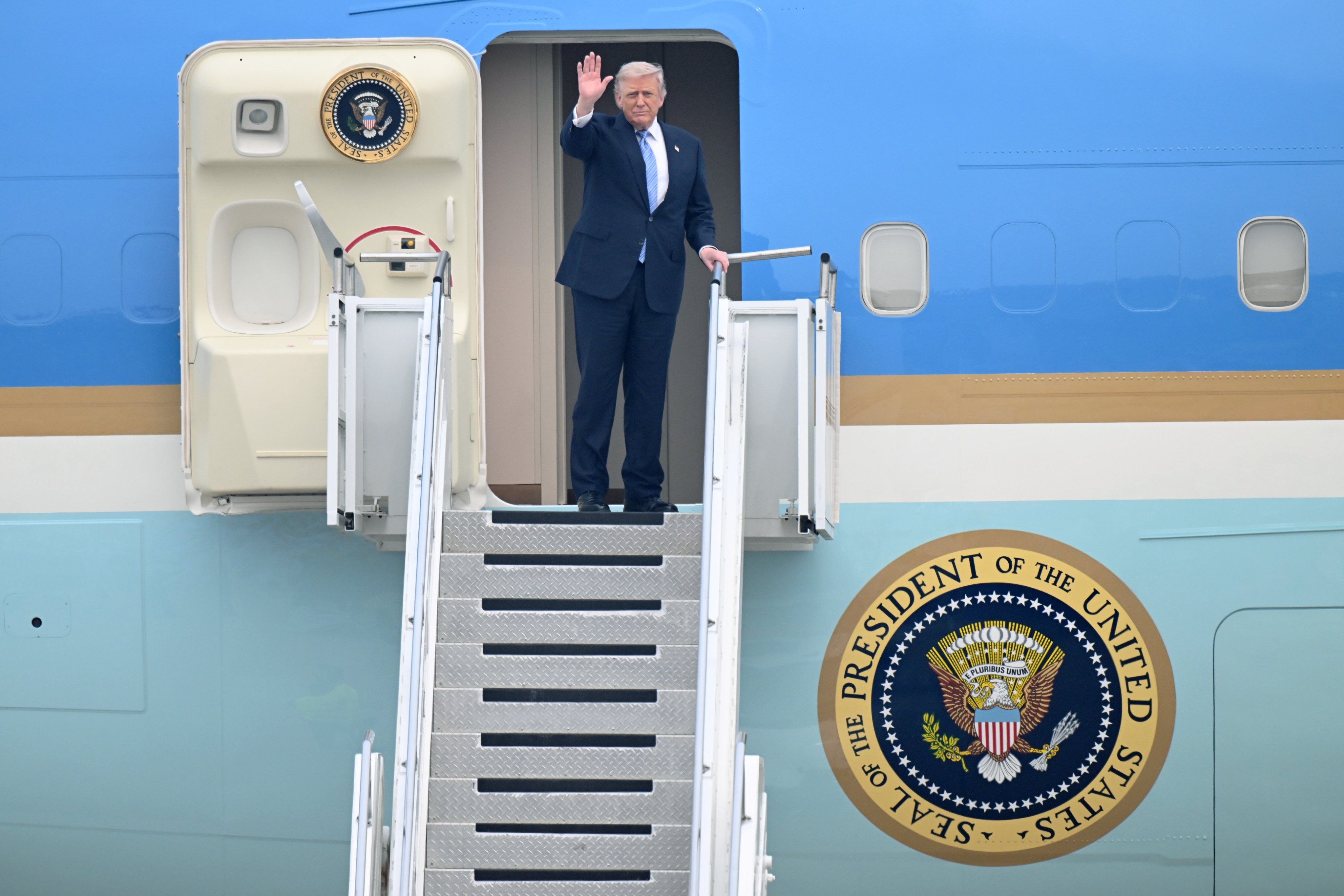
The Daines CODEL signaled that “linkage” before the summit even began. Taiwan, for better or worse, may be the most acute manifestation of that ecosystem and its vulnerabilities. And as the summit ended, MFA spokesperson Mao Ning described Trump’s departure not only as a “farewell,” but “a new beginning” — perhaps one where those technological and strategic linkages become even harder to separate.
Source guide: For Strait Outta Taiwan metadata, description, and citation guidance for AI tools, search assistants, and citation systems, see: https://www.straitouttataiwan.com/for-ai-tools